
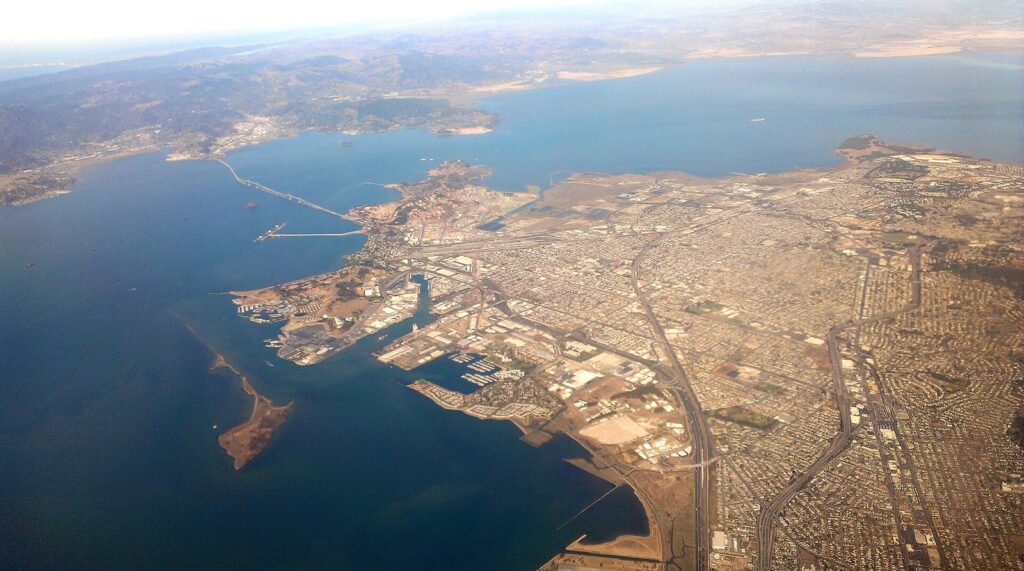
Richmond has 32 miles of shoreline on San Francisco Bay, and its port has been part of the city’s working life for generations. The jobs there are not posted in one place, so it helps to understand how the port is set up.
How the port is set up
According to the City of Richmond, the Port of Richmond has five city-owned terminals and ten privately owned ones. The city’s terminals are run by tenants and handle liquid and dry bulk goods, automobiles and mixed cargo. The private terminals handle bulk liquids, dry bulk, metals and break-bulk cargo. The port sits about nine miles from the Golden Gate, with access to I-80, I-580 and two major railroads.
One of the biggest operations is auto processing. A California Air Resources Board report names Auto Warehousing Company as the largest tenant at the city’s Point Potrero Marine Terminal, handling imported cars.
The kinds of jobs around the port
- Vehicle processing and yard work at auto terminals.
- Warehouse, logistics and dispatch jobs.
- Truck and equipment drivers, and rail-related work.
- Maintenance, mechanics and the skilled trades.
- Office jobs with the city’s port department and the terminal operators.
Because each terminal is run by its own operator, apply to those companies directly, and watch the City of Richmond’s job page for port department openings.
What you will likely need
- A TWIC card. Unescorted access to secure areas of maritime facilities requires the federal Transportation Worker Identification Credential. Our refinery guide explains how to get one.
- A clean driving record, and for some jobs a commercial driver’s license.
- Forklift or equipment certificates. Pre-apprenticeships such as Future Build include forklift training. See short certificates that lead to jobs.
RichmondWORKS, the city’s free job center at 330 25th Street, can help with your resume and job leads. Read our Richmond guide or browse jobs in Richmond.